Residential & General Electrical
Electrical Panel Upgrades
Replace an undersized or obsolete panel with capacity for the way you actually use power.
Electrical Panel Upgrades — what's involved
Your panel is the point where the utility's power becomes your home's power, and it quietly sets the ceiling on everything else. A 60- or 100-amp panel installed when the house had a stove, a furnace and a television is now being asked to carry a heat pump, an induction range, a hot tub and possibly a car. When there is no space left for another breaker, when you are stacking tandem breakers into slots that were never rated for them, or when the panel carries a brand with a documented failure history, an upgrade stops being an improvement and becomes the fix.
Electric Shock replaces residential panels end to end: the load calculation that determines what size you actually need, the new panel and breakers, the grounding and bonding that older installations frequently lack, and the labeling that makes the finished panel legible to whoever opens it next. The work is coordinated with your utility and inspected, because a service change is not something to do quietly.
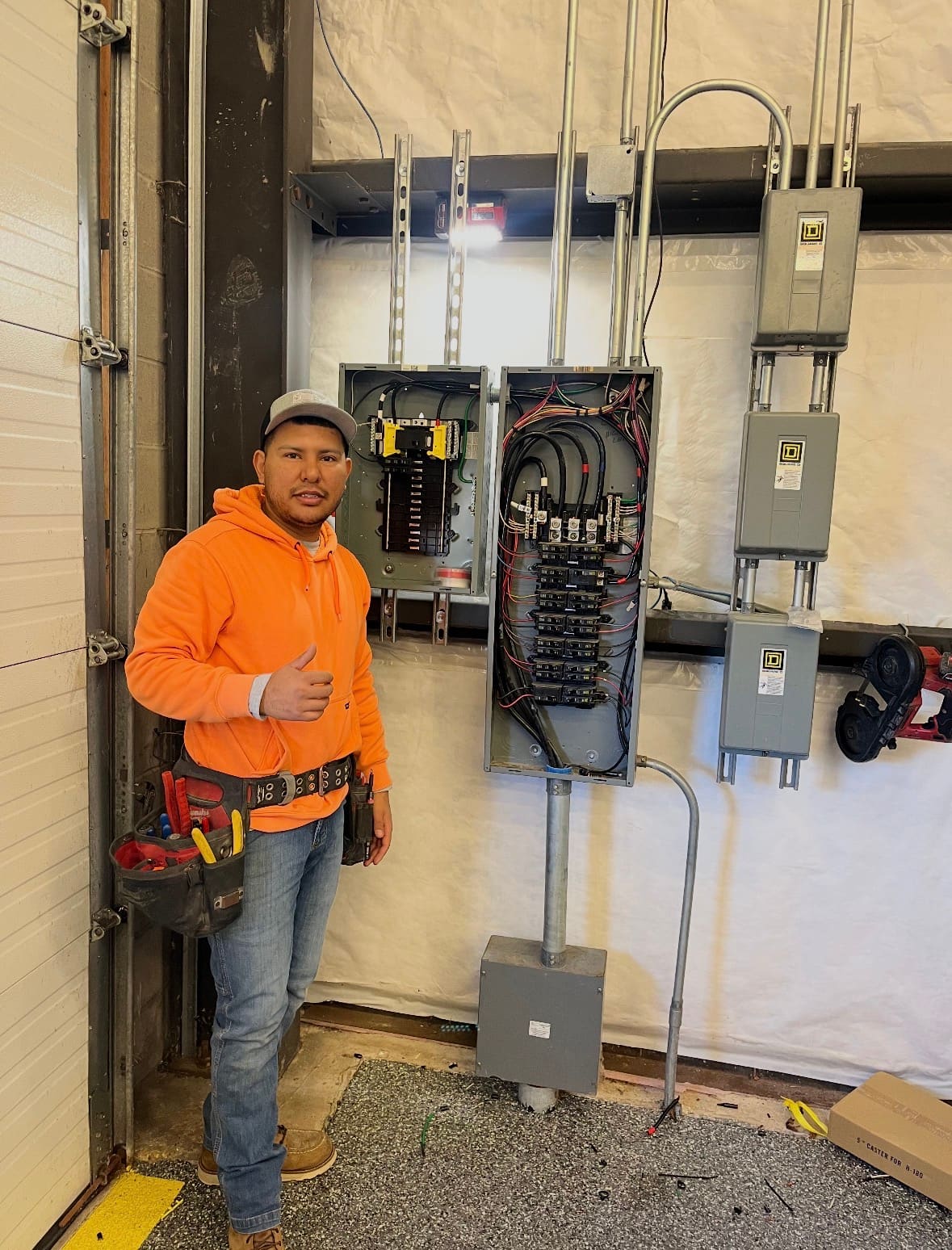
What a panel upgrade covers
- Load calculation to size the new service to your real and planned loads, not a guess
- Replacing fuse boxes, split-bus panels and panels with known defective breakers
- Increasing service capacity — commonly 100A to 200A — where the load calculation supports it
- New breakers, including AFCI and GFCI protection where current code calls for it
- Grounding electrode and bonding corrections, which older installations often never had
- A clearly typed and labeled directory so every circuit is identifiable
The Electrical Panel Upgrades process
Assessment and load calculation
We look at the existing panel, the service entrance, the grounding and the circuits actually in use, then run the load calculation that determines the service size your home needs — including anything you are planning, like a charger or an addition.
Permit and utility coordination
Panel and service work is permitted, inspected work in nearly every jurisdiction, and the utility has to be scheduled to disconnect and reconnect. We confirm what your municipality requires and line both up before anyone touches a wire.
Safe shutdown and changeover
With the service dropped, the old panel comes out and the new one is set, with feeders, grounding and bonding brought up to current code rather than reconnected as found.
Land, label and test
Every circuit is landed on an appropriately sized breaker, tested, and written into a legible directory — the part most often skipped, and the part you will use for the next twenty years.
Inspection sign-off
The inspector verifies the installation and the utility restores service. You get a panel that has been checked by someone other than the person who installed it.
What you get out of it
Headroom for what comes next
An EV charger, a heat pump or a finished basement all need capacity. Sizing for them now is dramatically cheaper than a second service change in three years.
Modern circuit protection
AFCI and GFCI breakers interrupt arc faults and ground faults that a 1970s panel simply cannot detect.
A panel that can be read
Accurate labeling and an uncrowded enclosure turn a future repair from an afternoon of guesswork into a ten-minute job.
Panel Upgrades questions
Still not sure? Send us the details and we'll give you a straight answer before anything is booked.
How do I know if my panel needs upgrading?
Does a panel upgrade require a permit and an inspection?
How long will my power be off?
Often booked alongside this
- Service & Meter UpgradesService masts, risers, meter sockets and service entrance conductors replaced and re-anchored.
- Sub-Panel InstallationFeed a garage, addition, shop or basement from its own sub-panel instead of a dozen long home runs.
- EV Charger InstallationLevel 2 home charging on a dedicated circuit, with the load calculation done first.
Need Electrical Panel Upgrades?
Tell us about the property and what you're trying to achieve. Quotes are free and there's no obligation.
Start with a free quote
Pick Electrical Panel Upgrades from the service list below and tell us what you need. Photographs of the panel, the room or the equipment help us answer far more precisely.