
Residential & General Electrical
Sub-Panel Installation
Add circuit capacity where the work is, without running everything back to the main panel.
Sub-Panel Installation — what's involved
A sub-panel is a second breaker panel fed from the main one, placed where the load is. If you are wiring a detached garage, finishing a basement, building an addition or setting up a workshop, running eight or ten individual circuits all the way back to the main panel is expensive, congests the panel and often will not fit. One correctly sized feeder to a local sub-panel does the same job with far less cable and leaves you room to add circuits later.
The details that matter in a sub-panel are the ones you cannot see once the cover is on: the feeder sized for the actual load and distance, neutrals and grounds kept separate — which is the single most common error in amateur sub-panel work — the bonding screw removed, and a separate grounding electrode at a detached structure. Electric Shock installs them so the next person to open the panel finds it correct.
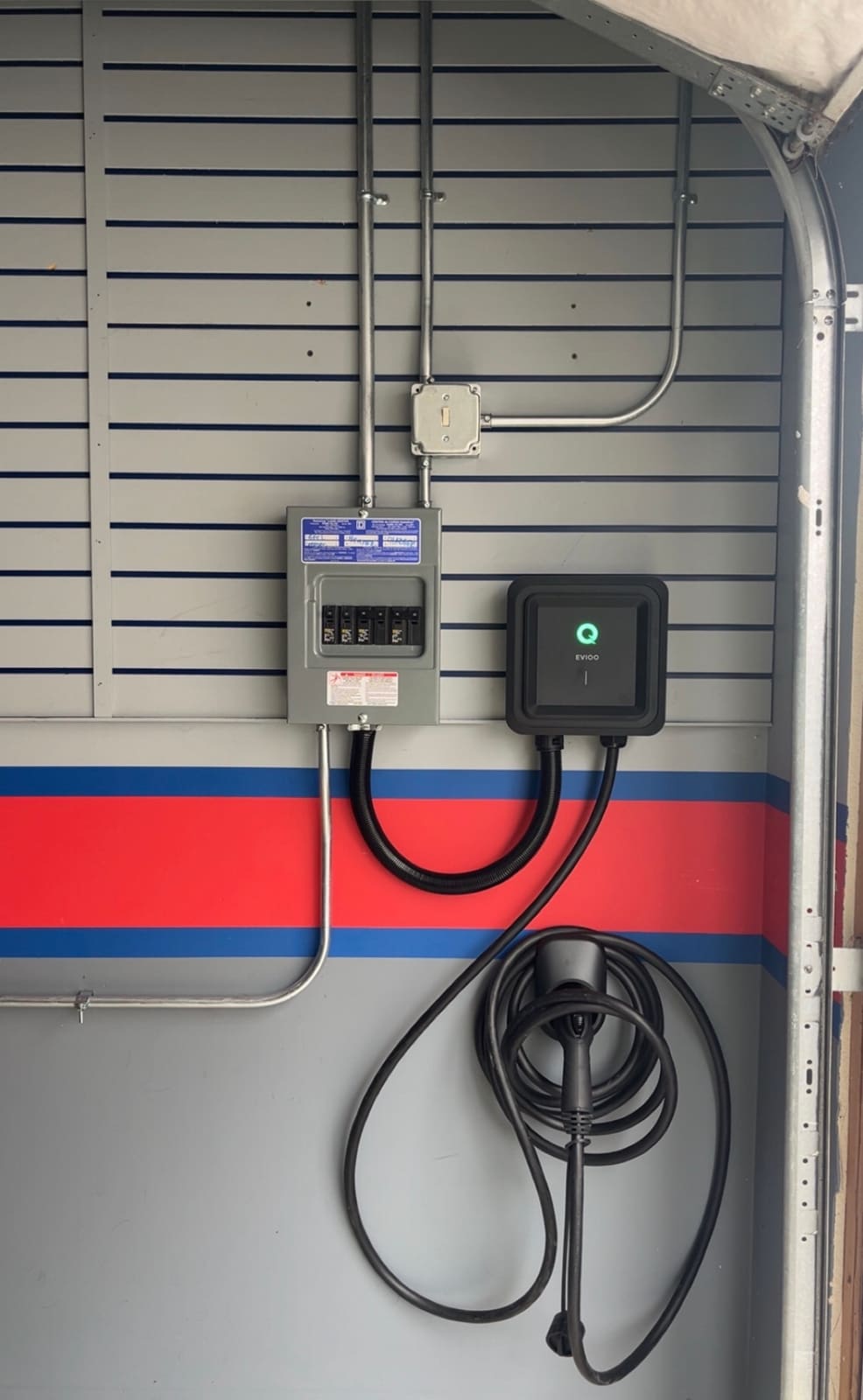
Where a sub-panel makes sense
- Detached garages, shops and outbuildings fed by an underground or overhead feeder
- Finished basements, attics and additions that need a cluster of new circuits
- Workshops running compressors, dust collection, welders or 240V machinery
- Garage sub-panels feeding an EV charger plus outlets and lighting
- Main panels that are physically full but not electrically overloaded
- Kitchen and laundry remodels that add several dedicated circuits at once
The Sub-Panel Installation process
Size the feeder
We total the loads the sub-panel will carry and factor in the distance — voltage drop over a long run to a detached building often drives the conductor size more than the load does.
Confirm the main panel can carry it
A sub-panel adds a breaker to the main panel and adds its load to the service. If the service is already near capacity, we will tell you that before the work starts rather than after.
Route and protect the feeder
Conduit, direct burial or interior cable, chosen for the route and the environment, at the depth and with the protection the location requires.
Set the panel correctly
Neutrals and grounds on separate bars, bonding screw removed, four-wire feeder, and a grounding electrode system at a detached structure. This is where sub-panels are most often got wrong.
Circuit, label and test
Branch circuits are landed, tested and labeled, and the new panel is left with clearly documented spare capacity.
What you get out of it
Cheaper than a dozen home runs
One feeder replaces many long circuit runs, which usually costs less in both material and labor once you pass three or four circuits.
Room to keep adding
A sub-panel with spare slots means the next circuit in that garage or basement is a short, simple job.
Isolates a whole area
You can kill power to the shop or the addition without hunting through the main panel or shutting down the house.
Sub-Panel Installation questions
Still not sure? Send us the details and we'll give you a straight answer before anything is booked.
Why do neutrals and grounds have to be separated in a sub-panel?
Can a sub-panel fix a full main panel?
Does a detached garage need its own ground rod?
Often booked alongside this
- Electrical Panel UpgradesSwap a crowded, fused or obsolete panel for a modern breaker panel with room to grow.
- EV Charger InstallationLevel 2 home charging on a dedicated circuit, with the load calculation done first.
- Outlet & Switch InstallationAdd outlets and switches, replace worn devices, and put GFCI protection where code requires it.
Need Sub-Panel Installation?
Tell us about the property and what you're trying to achieve. Quotes are free and there's no obligation.
Start with a free quote
Pick Sub-Panel Installation from the service list below and tell us what you need. Photographs of the panel, the room or the equipment help us answer far more precisely.